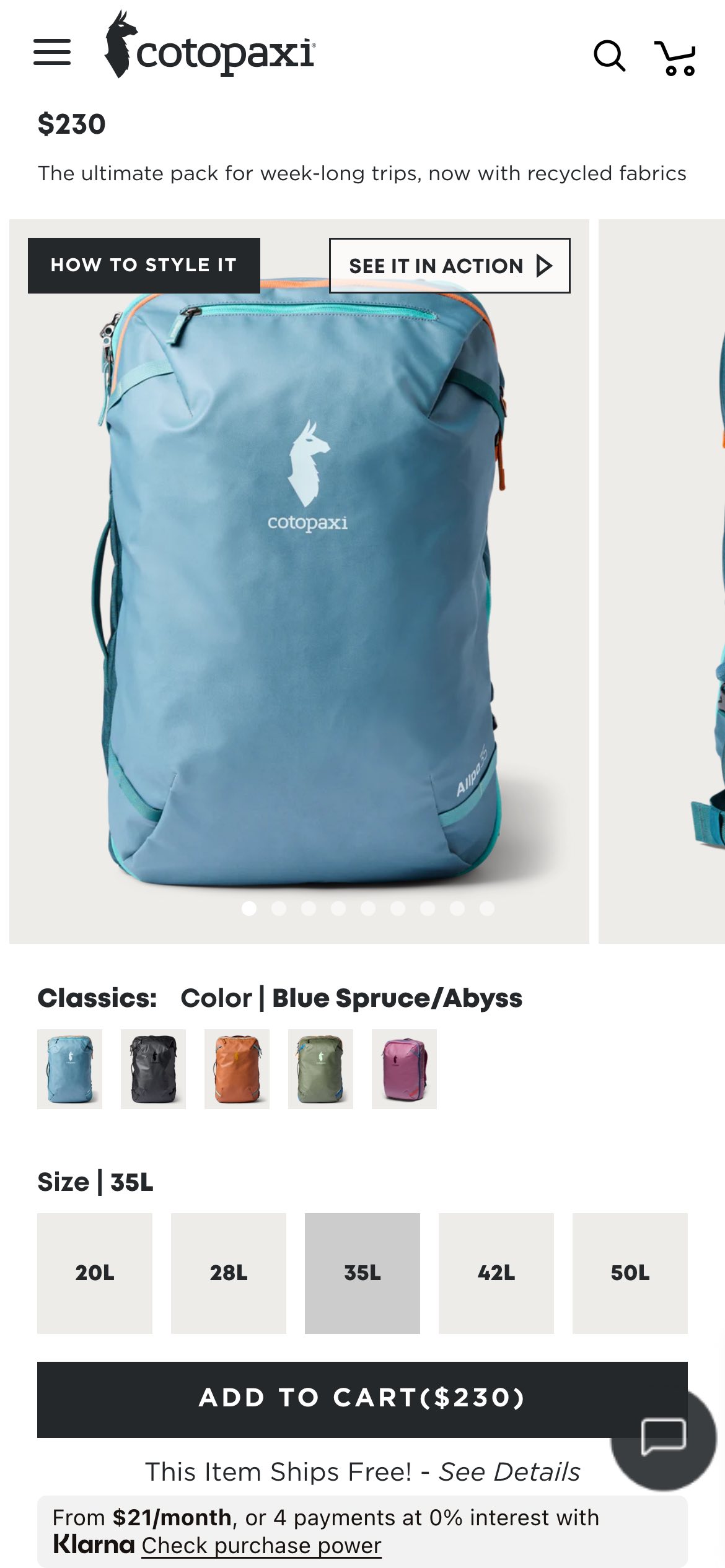
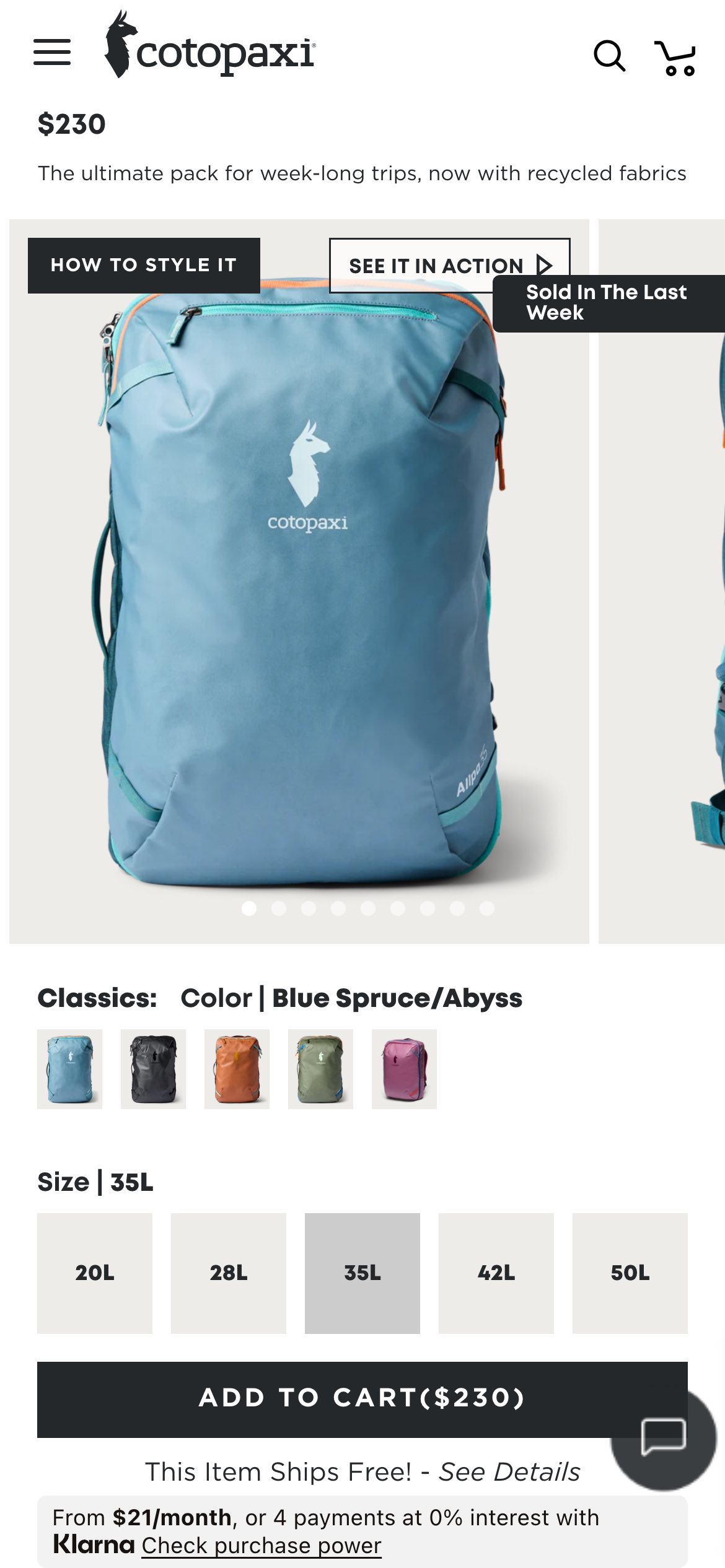
 CotopaxiProduct page
Product page purchase-count popup
What changed Adds a small popup with a recent-purchase count near the product photos.
Seen 4 Jul to 24 Jul 2026
Rolled back
ABSee / Product page experiments / Social proof on the product page
Pattern · Product pageSocial proof on the product page shows what other shoppers are doing — “N bought this week”, “N viewing now”, “Trending”, “Bestseller” — near the price or the photo. ABSee records brands testing it; its figures are being refreshed.
Updated October 2026 · Source: ABSee record · Methodology →
The experiments in the record fall into a few themes.
Counts. Most added a count line or badge: recent purchases (“N people purchased this week”) or recent views over the past day.
Labels. Several used a label instead of a count, or on top of one: “Trending”, “Popular”, “Bestseller”, “Fan Favourite”, “Top Subscription Product”.
Placement. Several tested where it sits: under the price, above the size picker, over the product photo, or by the add-to-bag button.
Buyers against viewers. A couple tested purchase counts head-to-head against view counts.
Public examples from the record, with the page before and the version tested. The chip shows what the brand did next: Kept means the tested version became the page; Rolled back means the original stayed.
CotopaxiProduct pageWhat changed Adds a small popup with a recent-purchase count near the product photos.
Seen 4 Jul to 24 Jul 2026
Read these as evidence, not results: each card shows what one brand did next, not the lift behind it.
A shopper looking at one product cannot see the other people looking at it. Social proof makes them visible: a count of recent buyers or viewers, or a label that says the item is popular. It sits close to where the decision is made — by the price, on the photo, or next to the button.
Every experiment in this group sits on the product page. Where social proof turns into urgency — “going fast” rather than “popular” — it belongs to the low-stock and urgency pattern instead.
Treat this page as evidence for a hypothesis, not an answer.
On the product page, in the record: counts of recent purchases or views, such as “N people purchased this week”, and labels such as “Trending”, “Popular” and “Bestseller”. The public example here is Cotopaxi's purchase-count popup. See the full list in the ABSee database.
ABSee does not publish a rate for these messages. The record shows that most experiments add a count of recent purchases or views, and a couple test purchase counts against view counts. Per-experiment outcomes are in the ABSee plan.
In the record: under the price, above the size picker, over the product photo, or next to the add-to-bag button. Brands test these placements against each other. That is what brands tried, not a recommendation.
Show me product-page social proof experiments from fashion brands this year.
Works in Claude, ChatGPT or Gemini once ABSee is connected.
Connect your AI →